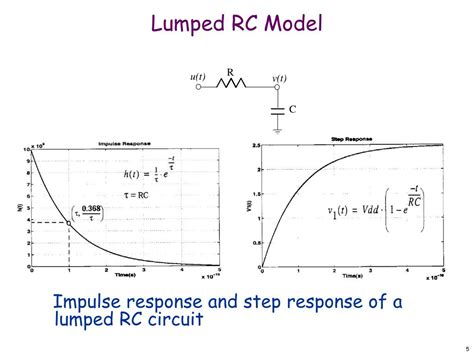
Lumped capacity model
The lumped-element model (also called lumped-parameter model, or lumped-component model) is a simplified representation of a physical system or circuit that assumes all components are concentrated at a single point and their behavior can be described by idealized mathematical models. This allows engineers to focus on essential variables and relationships without getting bogged down in complex details. Across this boundary, the temperature-value jumps in a discontinuous fashion. Nonlinear Systems: Intro to Linearization.
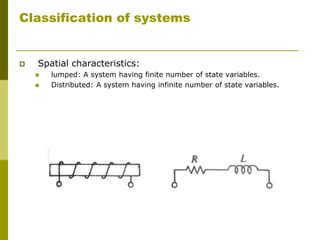
Lumped system theory
Lumped-parameter models are the simplest and best applicable to systems containing young water with modern tracers of variable input concentrations, e.g., tritium, Kr and freons, or seasonably varia- ble 0 and2H. The heat transferred is analogous to the electric current and the thermal resistance is analogous to the electrical resistor. Lumped parameter models have limitations when dealing with systems where spatial variations are significant or when rapid changes occur across the system.
What are lumped elements
It will be shown that the lumped- parameter models are particularly useful for interpreting the tracer data which were obtained at separate sampling sites, when it is neither possible, nor justified, to use distributed- parameter models, as the latter require more detailed knowledge of the investigated system, which is often unavailable. Several publications can be found that describe how to generate lumped-element models of buildings. Practice Quiz Guides Glossary. Lumped circuit meaning
A lumped system is one in which the dependent variables of interest are a function of time alone. In general, this will mean solving a set of ordinary differential equations (ODEs) A distributed system is one in which all dependent variables are functions of time and one or more spatial variables. State-Space Representation in Dynamic Systems. Review Questions. Lumped capacitance with heat generation
Schematic representation of the lumped-parameter model and input data used to calibrate it. On the top, IVUS registration was illustrated in the yellow rectangle: a slice was selected to extract. A dynamic system where properties are spread out over a spatial domain, requiring partial differential equations for analysis rather than ordinary differential equations. Practice Quiz Guides. It was developed as a mathematical analog of electrical capacitance , although it also includes thermal analogs of electrical resistance as well. 
Characteristics of lumped up systems
The lumped-parameter model reduces the description—configuration, geometry, field, and properties—of the physical systems to the topology of a distributed companion system, whose nodes represent the terminals (ports) and the branches are the lumped elements. The dominant-layer method is one simple and reasonably accurate method. In contrast, distributed parameter models take into account variations across space, making them better for complex systems like heat conduction or fluid flow. This article may be too technical for most readers to understand. Lumped rc model
We investigated the feasibility of estimating model parameters for a closed-loop lumped parameter model of the left heart and systemic circulation using the step-wise subset reduction method. This proceeded by first investigating the structural identifiability of the model parameters. This law simply states that the temperature of a hot or cold object progresses toward the temperature of its environment in a simple exponential fashion. Practice Quiz Guides. Lumped circuit abstraction
Lumped parameter models that incorporate non-invasive personalized cardiac parameters offer a unique way to generate these personalized PV loops in a rapid and non-invasive manner. Additionally, they can be used to study the impact of different treatment options and treatment priorities in a patient-specific manner [ 28, 72, , , ]. Lumped-element models of buildings have also been used to evaluate the efficiency of domestic energy systems, by running many simulations under different future weather scenarios. In such cases, distributed parameter models or numerical simulations are preferred to capture the complexities involved, ensuring better alignment with actual behaviors observed in physical systems.